What if the best vegan restaurants in your town never call themselves vegan at all? That sounds backward at first. Most people scroll through listings looking for the label, tap the one with a leaf icon, and assume the job is done. The label tells you what a restaurant wants to be called. It tells you almost nothing about what happens in the kitchen, and the kitchen is the only part that ends up on your plate.
Here is the problem with hunting vegan restaurants in West Chester, PA, by name alone. A place can wear the label and still lean on processed substitutes, bagged sauces, and frozen shortcuts. Meanwhile, a regular pizza-and-salad kitchen down the street might make every sauce from plants without ever mentioning it. Judging by the sign, it filters out some of the strongest options before you even taste anything.
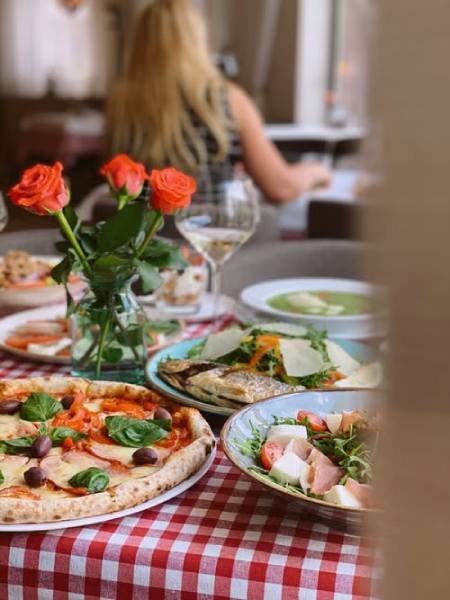
Take The Tomato Shack Salad & Pizza Co, West Chester, as a working case. Nothing about a pizza and salad spot on Gay Street screams plant-based at first glance. Yet every sauce, dressing, and spread in that kitchen is made without animal products, the crust is fully organic, and the whole line runs from scratch. A vegan eater who skipped it because of the sign would have skipped one of the easier places in town to order from.
Why Pizza Places Can Outperform Labeled Vegan Restaurants
A dedicated vegan restaurant proves one thing: that no animal products enter the building. It proves nothing about ingredient quality. Plenty of items qualify as vegan even when produced in a factory with a paragraph-long ingredient list. Vegan and healthy are not the same claim, though marketing often blurs the two together.
A scratch kitchen proves something different. When the dough is mixed in-house, and the sauces are made from fresh produce, you can trace what went into the food. If those scratch recipes also happen to skip dairy, eggs, and other animal inputs, you get plant-based eating and real cooking in the same order. Perhaps that combination matters more than the sign out front ever did.
There is also the social side. A labeled vegan spot can be a hard sell to a family that eats meat. A pizza place that quietly covers vegan needs asks nobody to compromise, which means you actually get to eat there more than once a year.
The Sauce List Tells You More Than the Menu Does
Want a fast way to size up a kitchen? Skip the entrees and read the sauces. Dairy hides in sauces more than anywhere else on a menu. Butter finishes the marinara. Cream thickens the dressing. Cheese powder sneaks into things that have no business containing cheese.
A kitchen that builds every sauce, dressing, and spread from plants has removed the most common failure point before you order. That choice also tends to signal something about the cook’s habits. Getting flavor from tomatoes, herbs, oil, and acid takes more effort than reaching for cream, and kitchens that take that effort in one area usually take it everywhere.
Compare that with a menu where only two dressings are safe, and the server has to ask. The difference shows up in how relaxed your ordering feels. One place makes you work. The other one already did the work.
Questions That Separate Real Vegan Restaurants from Pretenders
You do not need to interrogate anyone. A few calm questions at the counter reveal plenty. Try these the next time you test a new spot:
- Ask what goes into the dough. A short answer with real ingredients is a good sign. A shrug is not.
- Ask which dressings contain dairy. If the answer is none of them, you found something rare.
- Ask whether the sauces are sourced from a supplier or made on-site. Scratch kitchens answer this one proudly.
- Ask how they handle a no-cheese pizza order. A kitchen that gets this request often handles it without confusion.
- Ask about nuts and soy in the spreads. Kitchens that track allergens closely tend to track everything closely.
Watch the reaction as much as the answer. Staff who know their ingredients answer in seconds. Staff who have to check three times are telling you the kitchen never made this a priority, and that honesty is useful too.
Cross-Contact Matters More Than the Label Ever Will
Now for the uncomfortable part. A menu item can start vegan and stop being vegan on the way to your table. Shared prep surfaces, a cheese-dusted cutting wheel, the same ladle moving between sauces. Labels on a website cannot protect you from any of that.
This is where ingredient discipline pays off. When the sauces and spreads across the whole kitchen skip dairy, gluten, nuts, and soy, cross-contact loses most of its danger. There is less of the risky stuff moving around the line. The eater with an allergy on top of a vegan diet feels this relief most, because they normally carry the whole burden of checking alone.
Ask any parent who orders for a reactive kid. They will tell you the safest kitchens are the ones where the answer to what is in this never changes, no matter who you ask.
Order Once and Let the Kitchen Show Its Hand
Reading signals only goes so far. At some point, the real test is a single order. Pick something simple, a salad with the house dressing or a pizza without cheese, and pay attention to how it arrives. Did anyone push back or act confused? Did the food taste finished, or did it feel like a regular dish with parts removed?
A kitchen built on plant-based sauces and scratch dough passes this test without trying, because nothing was removed in the first place. The dish you got is the dish everyone gets. That is the whole secret hiding behind this topic. The strongest vegan restaurants near West Chester might not even carry the word on the sign. They cook in a way that makes the label unnecessary, and one visit is usually enough to tell.